
The Green Evolution of Capsule Hotels
In 2025, the hospitality landscape is undergoing a meaningful transformation — one where sustainability is no longer optional, but central to design, construction, and guest experience. Capsule hotels, with their inherently efficient footprints and urban-friendly formats, are particularly well positioned to benefit from this shift. According to industry reports, the global capsule hotel market is expected to continue growing at a strong pace thanks in part to sustainability and design innovation. Grand View Research+2cardinalcourieronline.com+2
For a manufacturer like StarsDove, specialising in capsule pods, embracing sustainable design trends is not just about marketing—it’s about delivering real value: lower operational cost, better guest experience, and stronger brand positioning in a greener world.
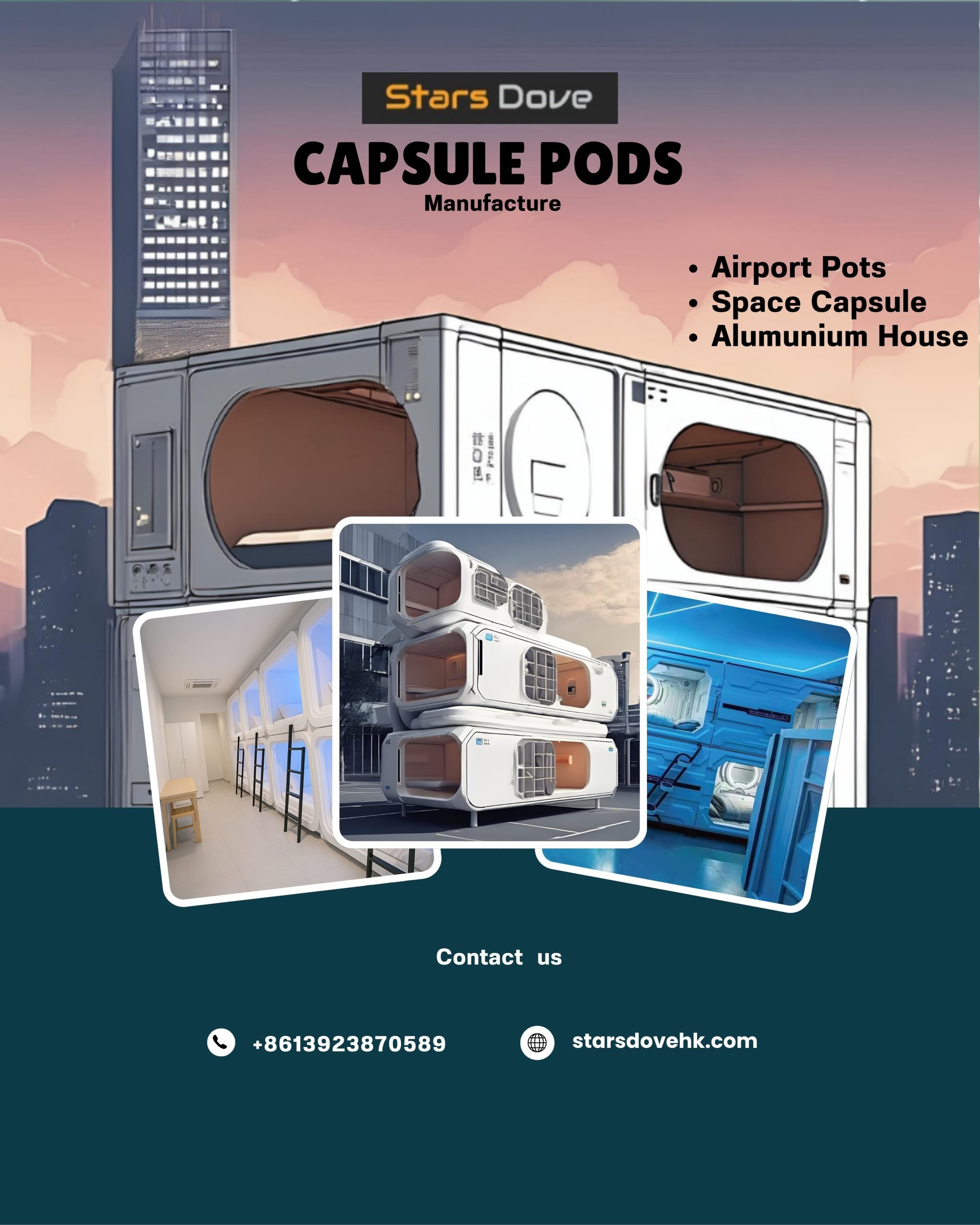
1. Eco-Friendly Materials & Circular Design
One of the most visible sustainable design trends in capsule hotels is the use of materials and furniture systems that reflect eco-values. Hotels in 2025 are increasingly choosing materials that are recyclable, low in VOCs (volatile organic compounds), and durable enough to reduce lifecycle waste. wpcspc.com+1
For capsule hotels this means shells, pods, wall panels, bed frames and finishes designed with:
Recycled or sustainably-sourced composite materials (e.g., WPC, bamboo veneer) wpcspc.com+1
Modular furniture and components that can be disassembled, refurbished or reused (circular economy principle) thearabianuae.com+1
Minimal use of single-use plastics, and low-impact finishes to boost indoor air quality.
In short: the capsule pod is becoming a micro-ecosystem of sustainable design, from structure to furnishings.
2. Modular & Prefab Construction for Speed and Sustainability
Another key trend is modularity and prefabrication. Capsule hotels are increasingly being built with modules/pods manufactured off-site, then assembled onsite, reducing waste, shortening build times, and enabling more consistent quality. xcprefabhouse.com+1
Why this matters:
Less on-site waste and disturbance — beneficial in dense urban zones where capsule hotels often operate.
Higher precision manufacturing means better integration of sustainable systems (insulation, smart controls) from the start.
Easier future upgrades or expansions since modules can be swapped out or updated.
For StarsDove this means designing capsule pods that are prefabricated, stackable, modular, enabling hotel operators to scale or adapt more easily while maintaining a green footprint.
3. Smart Systems & Energy Efficiency
Sustainable design trends in 2025 extend deeply into the systems that power capsule hotels. Energy-efficient lighting, HVAC optimisation, IoT sensors, and renewable energy integration are becoming standard. thearabianuae.com+1
Key features include:
LED lighting, daylight sensors & motion controls to reduce power usage.
Smart HVAC zones, occupancy sensors to avoid wastage in unoccupied pods.
Renewable energy sources (solar, perhaps battery storage) to offset grid usage.
For capsule hotels, where each pod is relatively small, the opportunity for fine-tuned control is high—leading to meaningful savings and a tangible sustainability story.
4. Guest Well-Being & Biophilic / Minimalist Aesthetic
Sustainability isn’t only about materials or power—it’s also about creating spaces that enhance guest comfort and well-being. Design trends show increasing emphasis on biophilic touches (natural textures, greenery), minimalist interiors that reduce clutter (and thus cleaning/maintenance burden), and acoustics that ensure pods feel private and restful. The Luxe Insider+1
In capsule hotel design this might translate to:
Natural wood veneer accents, muted earthy colour palettes, tactile finishes.
Quiet pods with sound-absorbing materials.
Smart lighting that aligns with circadian rhythms to enhance sleep.
By combining sustainable design with guest comfort, capsule hotels appeal not only to eco-conscious travellers but to those who value restful, modern stays.
5. Space Optimisation & Urban Adaptability
Urban real-estate pressure is one of the key drivers for capsule hotels—and the sustainable design trends amplify this advantage. Capsule hotels are able to offer more beds per square metre, while sustainable design ensures that the operations run leaner. Reports show that the capsule hotel market is set to reach significant size by 2030. Grand View Research
Design implications:
Stackable pods, efficient circulation and shared services to reduce total footprint.
Reuse of existing spaces (old office buildings, converted warehouses) rather than new build from scratch—reducing embodied carbon.
Flexibility in layout so hotels can adjust to changing guest demands without major renovations.
For a brand like StarsDove, this emphasises the value proposition: capsule pods that deliver high density, modular install, and low-impact build.
6. Waste Reduction, Water Efficiency & Circular Operations
Beyond construction and materials, sustainable design trends for 2025 include operational sustainability: how the hotel runs day-to-day. This includes water-saving fixtures, waste-minimisation programmes, composting, reusable amenities, and more. thearabianuae.com+1
Capsule hotels can leverage this by:
Installing low-flow showers/taps in communal areas.
Using bulk amenities and eliminating single-use plastics.
Designing pods and communal spaces with furniture and finishes that last longer, reducing replacements.
These operational elements support the broader sustainability narrative, reinforce brand credibility, and reduce costs over time.
7. The Business Case: ROI & Brand Value
All these sustainable design trends are not just nice extras — they’re business-smart. Studies show that hotels with strong sustainability credentials attract more repeat customers, improve brand perception, and can reduce operational expenses significantly. thearabianuae.com+1
For capsule hotel operators (and for pod manufacturers like StarsDove) the benefits are clear:
Lower energy bills, reduced maintenance, longer asset life.
Strong marketing story (“eco-capsule hotel”) which appeals to younger demographics (Millennials, Gen Z) who value sustainability.
Better positioning for future regulations and certifications (LEED, WELL, etc).
Therefore adopting these design trends is not just about ethics—it’s about competitiveness and future-proofing.
8. How StarsDove Is Leading the Way
At StarsDove, we recognise these sustainable design trends and integrate them into our capsule pod solutions. Our approach includes:
Manufacturing pods with high-quality eco-materials, modular construction for quick install.
Designing pods that integrate smart lighting, efficient climate control, and sustainable finishes.
Offering flexibility so hotel developers can scale and adapt pods with minimal waste.
By aligning with the 2025 trends of modularity, sustainability, guest well-being and operational efficiency, we position our clients for success in a market that is increasingly looking for green credentials.
Conclusion: The Future Is Sustainable, Modular & Smart
As we move further into 2025, the path forward for capsule hotels is clear: incorporate sustainable design trends in every layer—from materials, construction, systems, operations to guest experience. Capsule hotels are uniquely positioned to capitalise on these trends thanks to their compact, modular nature.
For hoteliers and developers, choosing a partner like StarsDove means you’re not just buying a sleeping unit—you’re investing in a future-ready, eco-smart accommodation solution.
In short: the next generation of capsule hotels will not only be compact and efficient — they will be sustainable, adaptable and guest-centric. And that’s a trend worth embracing.