
Safety Standards in Capsule Pod Manufacturing: Ensuring Reliability for Modern Hospitality
As the demand for space-efficient accommodation continues to grow, capsule pods have become a global trend in hostels, hotels, co-living spaces, and worker dormitories. However, beyond the aesthetic design and advanced features, safety is the most critical element in capsule pod manufacturing. A well-designed pod must not only be comfortable and visually appealing—it must also meet international safety standards to ensure the protection of guests and the long-term reliability of the product.
This article explains the key safety standards in capsule pod manufacturing and how StarsDove ensures every unit is engineered for durability, stability, and maximum user protection.

Why Safety Matters in Capsule Pod Design
Safety in capsule pods impacts several essential areas:
1. Guest Protection
Guests often sleep in an enclosed, compact environment. Proper ventilation, non-toxic material, and fire-resistant properties are crucial to prevent potential hazards.
2. Business Liability
Hotels and hostels must reduce risks of accidents, electrical issues, or structural failures. A safe pod minimizes maintenance costs and protects the business from operational or legal problems.
3. International Export Requirements
For manufacturers like StarsDove serving global markets, compliance with international safety standards is mandatory to pass inspection, shipping, and installation requirements.

Key Safety Standards Required in Capsule Pod Manufacturing
1. Fire-Retardant Materials
To reduce fire risk, high-quality capsule pods use materials with fire-retardant certification.
Standards typically include:
ABS/FR (Acrylonitrile Butadiene Styrene – Fire Retardant)
Fiberglass reinforced with flame-resistant coating
Heat-resistant electrical components
Using these materials prevents flame spread, reduces smoke production, and maintains the structural integrity of the pod during emergency situations.
2. Certified Electrical Components
Most capsule pods include built-in lighting, ventilation fans, universal power outlets, USB ports, switches, and sometimes smart control panels.
To ensure safety, all electrical components must meet international requirements such as:
CE (European Standard)
CCC (China Compulsory Certification)
UL (United States Safety Standard)
A proper manufacturing process also includes:
Short-circuit protection
Overload protection
Heat-resistant wiring
Secure wiring channels to avoid pinching or exposure
Stability in voltage fluctuation environments
Electrical safety is one of the most important aspects in preventing fires and electrical accidents inside enclosed capsule environments.
3. Structural Strength and Weight Capacity
A capsule pod must support the user safely without vibration, instability, or cracking.
Manufacturers ensure:
Reinforced frame structure (steel, aluminum, or heavy-duty composites)
Anti-collision design
Impact-absorbent interior walls
Weight capacity testing (typically 150–250 kg)
For double-stack or bunk-style capsules, stability tests and anti-shake frame engineering are crucial to ensure long-term durability.
4. Ventilation and Airflow Control
Proper airflow is mandatory to prevent discomfort, suffocation risks, or excessive humidity inside the pod.
Standards include:
Minimum number of ventilation openings
High-quality, quiet ventilation fans
Air-circulation design to avoid CO₂ buildup
Anti-block mesh for safety and dust control
Good ventilation also improves sleep quality—something important for hostel guests and long-term users.
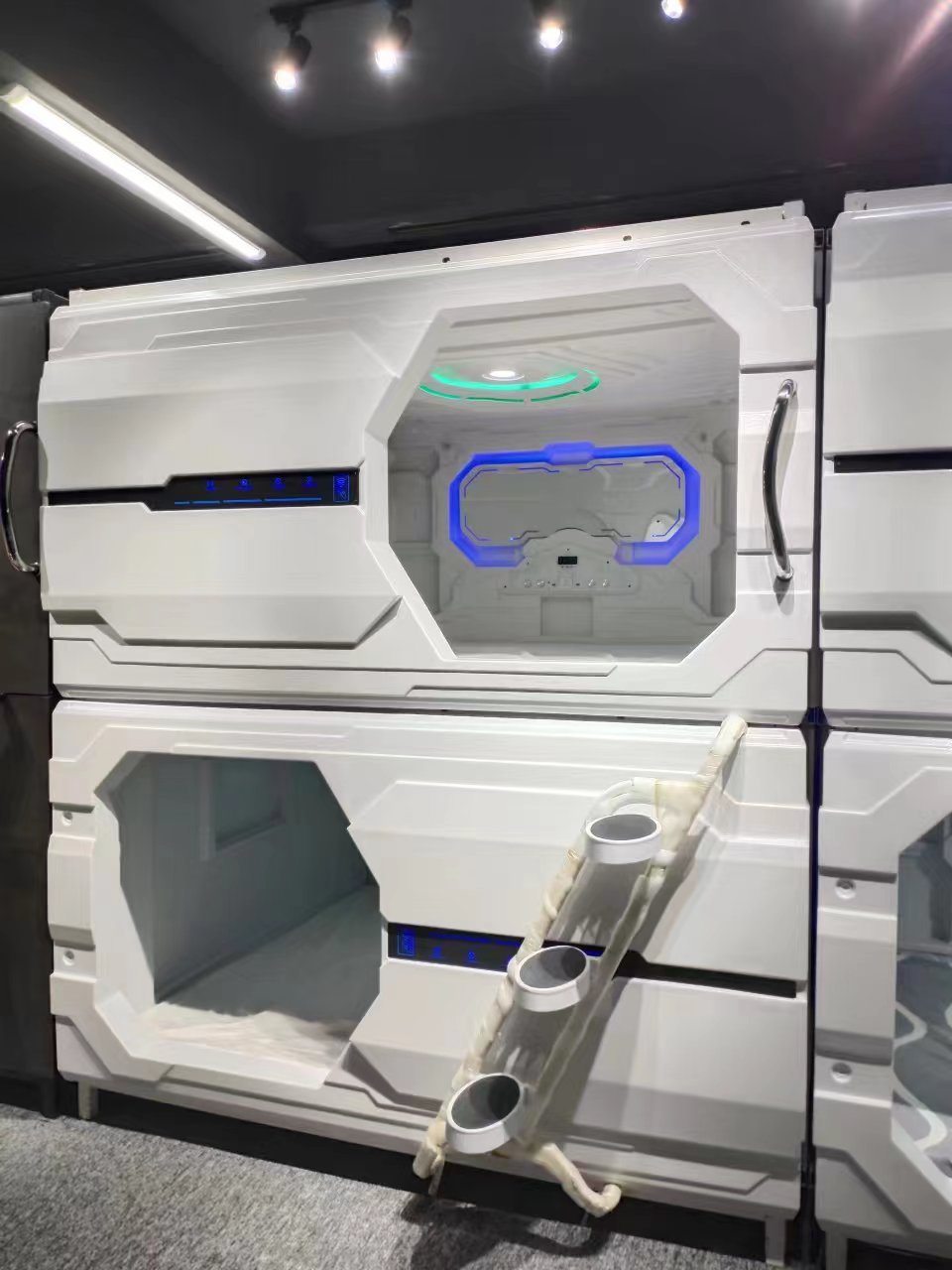
5. Non-Toxic and Hypoallergenic Materials
Guests spend hours inside a capsule pod, so all materials must be:
Odor-free
BPA-free
Non-toxic
Hypoallergenic
Resistant to mold and bacteria
Using superior ABS or fiberglass materials ensures the pod is safe even in humid environments such as tropical hostels or worker dormitories.
6. Emergency and Safety Exit Design
Although capsule pods are enclosed, they must be designed to allow easy access in emergencies.
Standards include:
Wide, unobstructed entry points
Optional emergency release system for electronic locks
Interior handles that allow quick exit
Fire-resistant curtains or doors
In dormitory environments, pods must also allow quick access for staff in case of emergency.
7. Noise and Vibration Control
A well-designed capsule pod minimizes unnecessary noise that could disturb guests.
Safety standards include:
Anti-vibration structure
Secure locking systems
Soft-close doors
Sound-dampening materials
This ensures both comfort and structural stability.
Quality Control and Testing in Capsule Pod Production
At StarsDove, every capsule pod unit passes through a multi-stage quality inspection before shipment:
1. Material Quality Inspection
Checking thickness, fire resistance, texture, and chemical safety of all raw materials.
2. Electrical Safety Testing
Simulated power load tests
Voltage stability check
Grounding test
Heat generation monitoring
3. Structural and Loading Test
Weight stress test on the internal frame
Durability test for long-term use
Stability check for bunk configurations
4. Ventilation Performance Test
Ensuring airflow meets safety and comfort requirements.
5. Final Assembly and Safety Audit
A specialist team checks all connections, fittings, screws, and joints.
Only after passing all tests does the pod receive approval for packaging and export.
Compliance with International Export Guidelines
StarsDove ensures that every unit meets safety requirements for international clients, including:
Electrical certification
Fire-retardant material verification
Export-grade wooden crate packaging
Secure installation guidelines
Safety manual for on-site assembly
Compliance ensures smooth customs clearance and long-term satisfaction for business owners.
Why Businesses Should Prioritize Safety When Choosing Capsule Pods
Choosing a low-cost supplier without proper safety standards increases risks such as:
Electrical fires
Structural collapse
Toxic fumes from poor materials
Short lifespan products
Customer complaints and bad reviews
By selecting a manufacturer like StarsDove that prioritizes high-level safety engineering, businesses invest in:
✓ Long-lasting durability
✓ Stronger guest trust
✓ Higher property rating
✓ Lower maintenance cost
✓ Better return on investment
Safety is the foundation of reliable capsule pod manufacturing. From fire-retardant materials and certified electrical components to structural stability, ventilation, and strict quality control—every aspect contributes to user comfort and operational reliability.
StarsDove ensures that each capsule pod meets global safety standards, making it a trusted solution for hotels, hostels, and co-living businesses worldwide. With robust engineering and export-level compliance, StarsDove capsule pods provide the perfect blend of comfort, durability, and safety for modern accommodation industries.